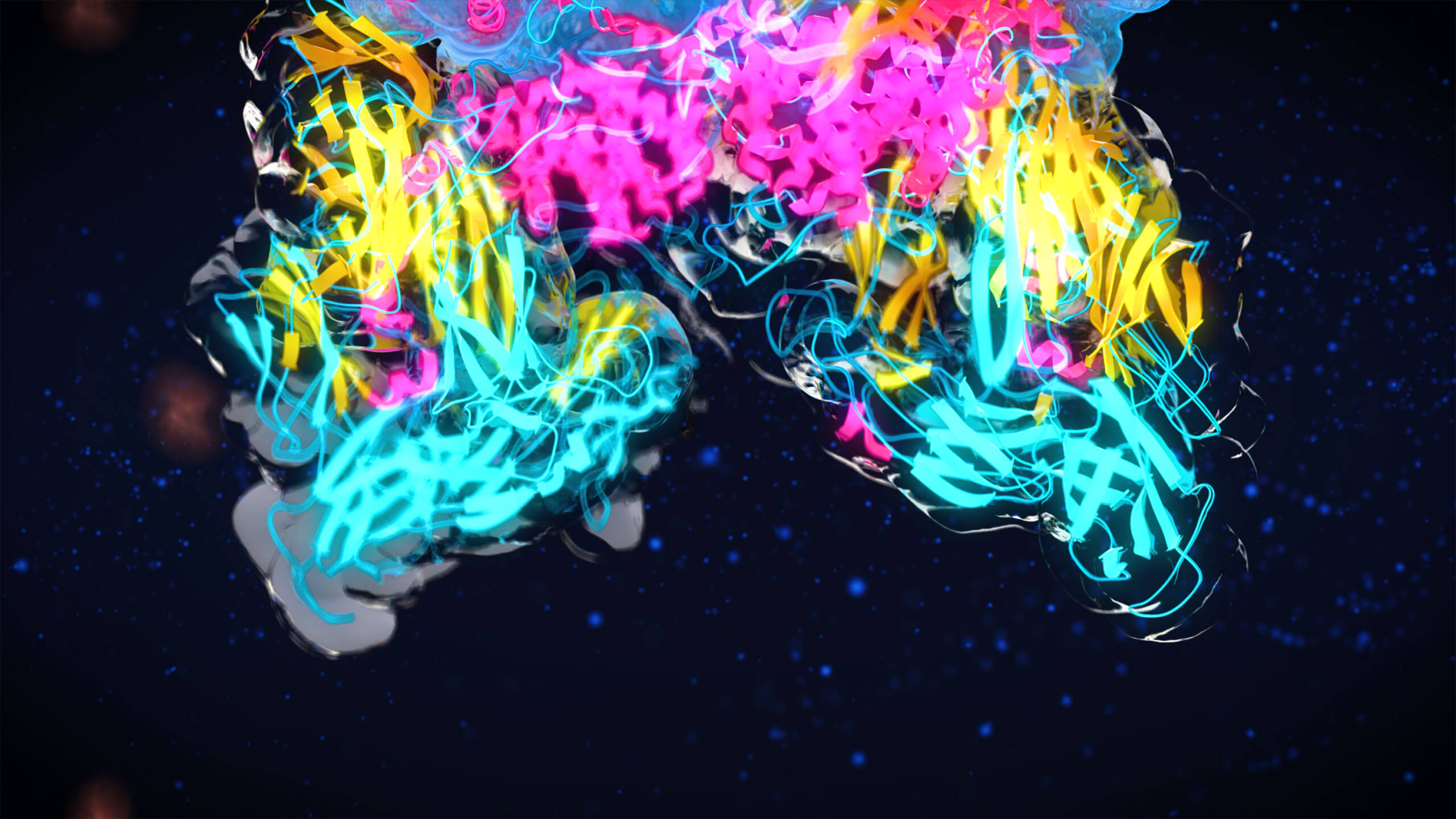


You may have seen the recent headlines regarding a breakthrough in “anti-aging injections” for cartilage regeneration, published in Science (Singla et al., 2025). Led by Stanford Medicine, this research identifies the inhibition of 15-hydroxyprostaglandin dehydrogenase (15-PGDH) as a novel pathway to restore regenerative capacity in chondrocytes (the cartilage-secreting cells in joints).
While the media is focused on the “fountain of youth” narrative, I want to provide you with a technical analysis of why this discovery is a significant tailwind for Cytonics and how it reinforces our A2M-based therapeutic paradigm.
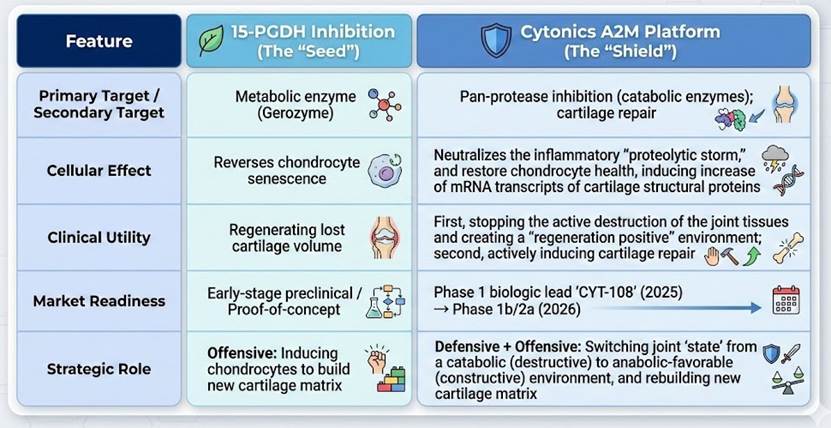
The “Shield and the Seed” Framework
In the development of Disease-Modifying Osteoarthritis Drugs (DMOADs), we categorize interventions into two camps: 🛡️ Protective (The Shield) and 🌱 Regenerative (The Seed).
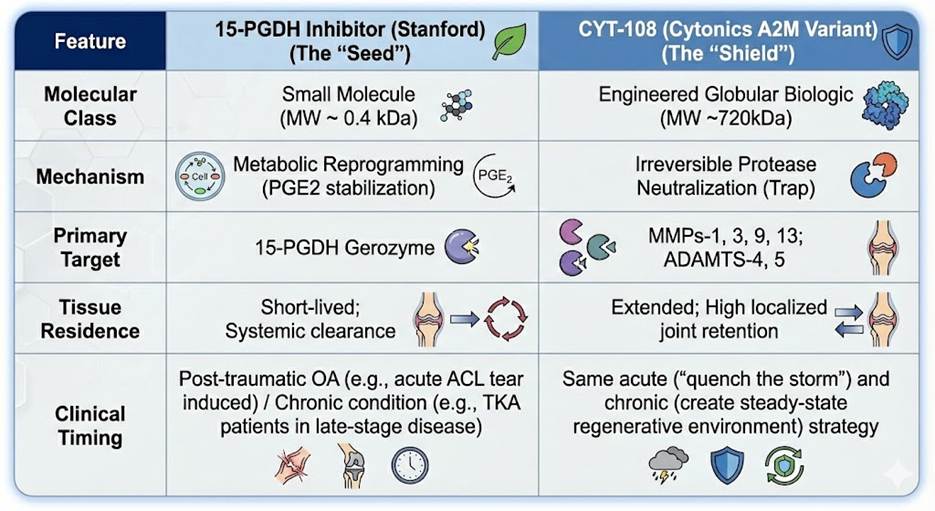
The Stanford discovery is a “Seed” technology: it “reprograms” cells to produce new hyaline cartilage by stabilizing PGE2 levels. However, as any molecular biologist or investor in the space understands, you cannot regrow a forest while the fire is still raging.
The OA joint is a highly catabolic environment characterized by an “acid rain” of proteolytic enzymes (MMPs and ADAMTS). Without the “Shield” provided by Cytonics’ A2M-based platform, any newly synthesized cartilage resulting from 15-PGDH inhibition would be rapidly degraded and rendered ineffective
Technical Comparison: Synergies in the DMOAD Landscape
Validation of Cytonics’ DMOAD Thesis
- Category Awareness: This publication in Science brings massive institutional and VC attention to the DMOAD sector, which has historically been underserved compared to oncology or rare diseases.
- The “Platform of Choice” Positioning: As regeneration technologies like 15-PGDH inhibitors move toward the clinic, the industry will realize they require a stabilized joint environment to function. Cytonics is positioned to provide that essential component.
- Partnership Opportunities: Our A2M variants “clean the joint environment,” making us the logical partner for any regenerative “Seed” technology. Our moat remains the most direct route to halting disease progression.
- De-risking through Differentiation: While the Stanford team targets a single metabolic pathway PGE2 stabilization, Cytonics addresses the final common pathway of cartilage destruction: the proteases themselves. Additionally, Cytonics’ lead A2M variant (“CYT-108”) has been shown to upregulate the production of critical structural components of cartilage, a complementary “rebuild” signal to PGE2 stabilization.
_____________________
“Investing in cartilage regeneration without first addressing the catabolic environment is equivalent to planting seeds in a hurricane. Cytonics provides the Shield that makes the Seed viable as a long-term therapeutic. As the regenerative field advances, Cytonics remains positioned as the indispensable foundation of the DMOAD standard of care.”
~ Joey Bose, President & CEO of Cytonics
_____________________
The 1-2 Punch
Cytonics views the future of Osteoarthritis therapy as a sequential or combined “cocktail” approach, mirroring successful paradigms in oncology and virology.
- Phase I: Stabilization (Cytonics): Administration of A2M variants to halt active tissue destruction and neutralize the “proteolytic storm.” This creates a “Protected Zone.”
- Phase II: Rejuvenation (15-PGDH + Cytonics): Once the environment is stabilized, metabolic inhibitors (the Stanford molecule plus Cytonics’ A2M variant) are introduced to stimulate the regrowth of hyaline cartilage within the Protected Zone.
Future Outlook
We view this new data as empirical evidence that the metabolic approach to OA is the future. Our goal remains to position Cytonics as the leader of this multibillion-dollar market. We are currently evaluating how these “rejuvenation” signals might interact with our A2M platform in future combination studies, potentially creating a “Super-DMOAD” cocktail that both protects joint tissues and regrows cartilage.
Thank you for your continued trust as we work judiciously to bring our life-changing therapies to market!
Appreciatively,

Joey Bose
President & CEO, Cytonics