
A Global Crisis.
A Molecular Solution
Osteoarthritis (OA) affects over 500 million people worldwide, causing debilitating joint pain, inflammation, and immobility. The sheer prevalence of this disease combined with the lack of effective, long-term treatment options places an enormous burden on the global healthcare system, with an estimated $1 trillion spent on symptomatic management and joint replacements. No one is spared: young, old, rich, poor, active, sedentary; osteoarthritis is agnostic to all of these variables. It is not a matter of if, simply when.
The Global Burden of Osteoarthritis
Osteoarthritis (OA) is the most common form of arthritis, affecting over 500 million people worldwide. In the U.S. alone, more than 32 million adults live with OA — a condition that causes chronic joint pain, stiffness, and limited mobility. As populations age and lifestyles become more sedentary, the numbers are only rising.

The Osteoarthritis Epidemic
OA is a progressive joint disease characterized by the erosion of cartilage and inflammation of the synovial membrane, leading to pain, stiffness, and debilitated quality of life. Unlike uni-factorial diseases, OA is driven by multiple molecular mechanisms that lead to cartilage degradation and joint inflammation. An effective disease-modifying therapy for OA (DMOAD) must potently target all these mechanisms while simultaneously mitigating deleterious off-target effects.
It is this complexity that makes OA one of the most intractable diseases known to man. A “true” DMOAD is The Holy Grail of Regenerative Medicine. And we think we’ve found it.
OVER
Worldwide
global prevalence**
Agnostic to wealth or standard of living post-traumatic or chronic condition affecting both athletes and the elderly
**https://www.who.int/news-room/fact-sheets/detail/osteoarthritis
MORE THAN
Americans
currently suffering from OA in the USA*
This figure is projected to reach 25% of the adult population by 2030.
*https://oaaction.unc.edu/oa-module/oa-prevalence-and-burden
over
Dollars
burden to the global economy***
Driven by spending on ineffective treatments, missed work, and reduced productivity, this burden continues grow worldwide.
***https://www.sciencedirect.com/science/article/pii/S106345842100738X
Why Current Treatments Fall Short
Available osteoarthritis “treatments” are all palliative: NSAIDs, corticosteroids, and hyaluronic acid injections all offer temporary, symptomatic relief without actually targeting the root cause of the disease. OA begins with trauma or chronic “wear-and-tear” to the joint, triggering an inflammatory cascade mediated by molecules called cytokines and proteases.
Hyperactive proteases break down cartilage, releasing cytokines and debris that fuels further inflammation in a vicious feedback loop that ultimately renders the joint brittle and devoid of cartilage. Left untreated, progressive joint damage inevitably requires joint replacement surgery to restore mobility and quality of life. Patients have no other recourse. Until now.

Current OA Treatments are Failing
Current OA treatments relieve symptoms but don’t address the root cause.
Conventional therapies are palliative, masking joint pain and inflammation temporarily, but fail to address the root molecular cause of the disease.

Non-steroidal Anti-inflammatory Drugs
(e.g., Advil)
Temporary
inflammation and pain reduction

Hyaluronic Acid
(viscous supplementation)
Temporary
artificial cushioning

Corticosteroids
(e.g., Prednisone)
Temporary
inflammation reduction, many side effects of chronic use
The Root Cause: Proteolytic Enzymes
At the heart of OA is a biochemical breakdown. When a joint is injured or inflamed, it triggers the release of destructive enzymes — specifically proteases — that degrade cartilage and synovial fluid. Left unchecked, this creates a vicious cycle of inflammation, pain, and degeneration.
The key to changing the game? Blocking those enzymes before irreversible damage occurs.

The Root Cause of OA
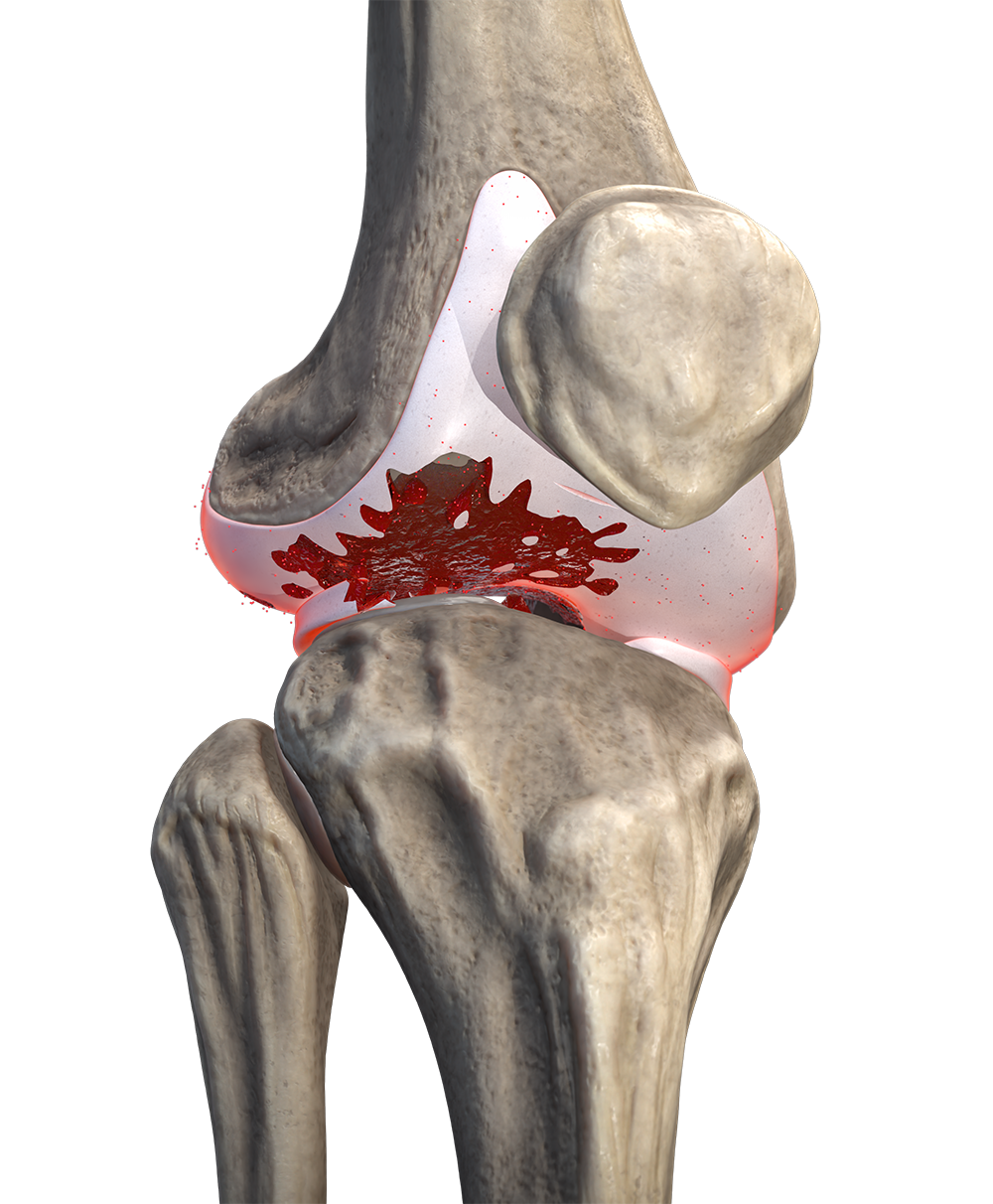
OA is caused by hyperactive proteases, a class of catabolic enzymes that degrade cartilage tissue.
A successful disease-modifying OA drug (DMOAD) must address target these protease enzymes. It restore joint health by encouraging tissue repair, reduce pain, and ultimately improve long-term quality of life.
Cytonics is targeting this cycle at its enzymatic origins.
A2M: The Body’s Molecular Bodyguard
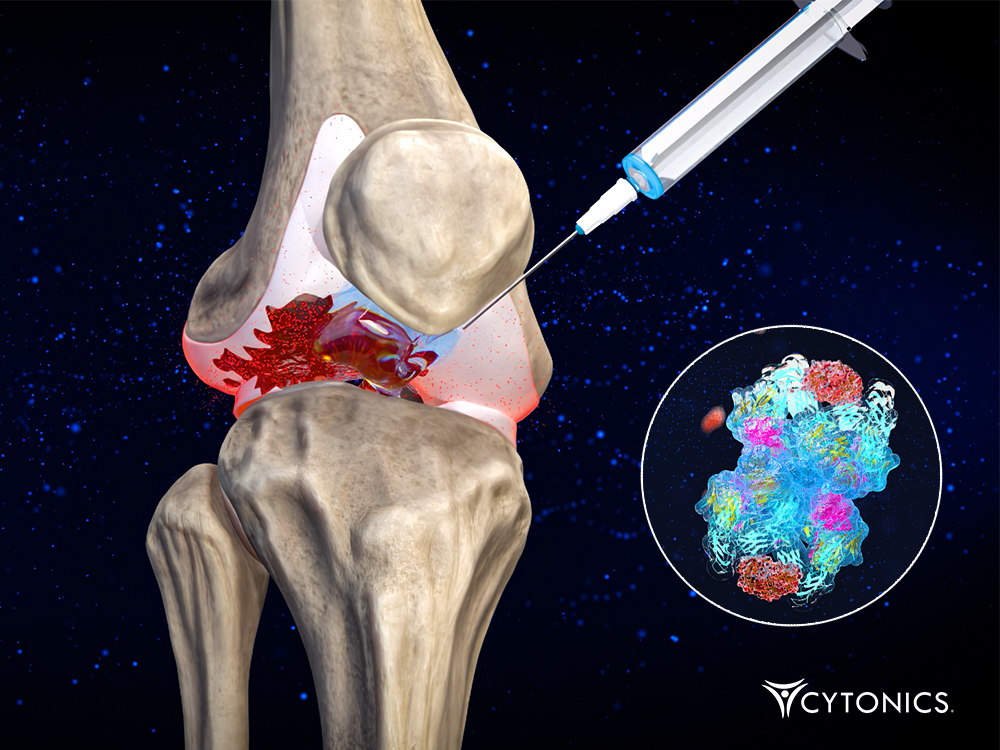
At the heart of our technology is Alpha-2-macroglobulin (A2M), a naturally occurring protein that serves as the body’s molecular defense system. A2M plays a crucial role in blood clotting and protects tissues by neutralizing proteases – enzymes that, when unregulated, contribute to degenerative diseases like osteoarthritis. However, the natural A2M levels in the joints are too low to offer meaningful protection.
This isn’t speculative science. A2M’s structure was first crystallized in 2012, and its role as the Physiological Guardian is backed by over 90,000 peer-reviewed studies, confirming its ability to prevent protease-mediated cartilage breakdown on the molecular level. Additional research (by both Cytonics and independent researchers) have confirmed A2M’s dual mechanism as a cartilage regenerator. This one-two punch is an example of potent disease-modification processes.
Theraputic Platforms
The Physiological Gardian
Our core technology harnesses the power of Alpha-2-macroglobulin (A2M), a naturally occurring protein in the body that acts as a “Physiological Guardian.” A2M helps protect tissues from inflammation and the destructive effects of proteases. This isn’t speculative science — A2M’s protective role is well-documented, with over 90,000 peer-reviewed studies and its structure first crystallized in 2012. Its impact spans a range of disease processes, earning it recognition as the body’s molecular bodyguard.


Nature’s Defense: Alpha-2-Macroglobulin (A2M)
A2M is a powerful protein that plays a natural role in blood clotting through a mechanism called protease inhibition. Proteases are enzymes that degrade other proteins, and when they become dysregulated, can lead to degenerative diseases such as osteoarthritis. We discovered that A2M is capable of neutralizing the proteases that drive cartilage degradation. Think of it as your body’s molecular defense system.
But here’s the problem: in OA patients, the natural A2M levels in the joints are far too low to lend any therapeutic benefit. A2M can’t keep up. The destructive proteases outpace it — and the joint continues to break down.
Leveraging Nature’s Beautiful Design
the power of Alpha-2-Macroglobulin (A2M)
- Alpha-2-Macroglobulin (A2M) is a blood serum protein that plays a role in the clotting cascade.
- A2M is a very well characterized, broad-spectrum protease inhibitor that has demonstrated potent inhibitory activity against the proteases that are upregulated in OA.
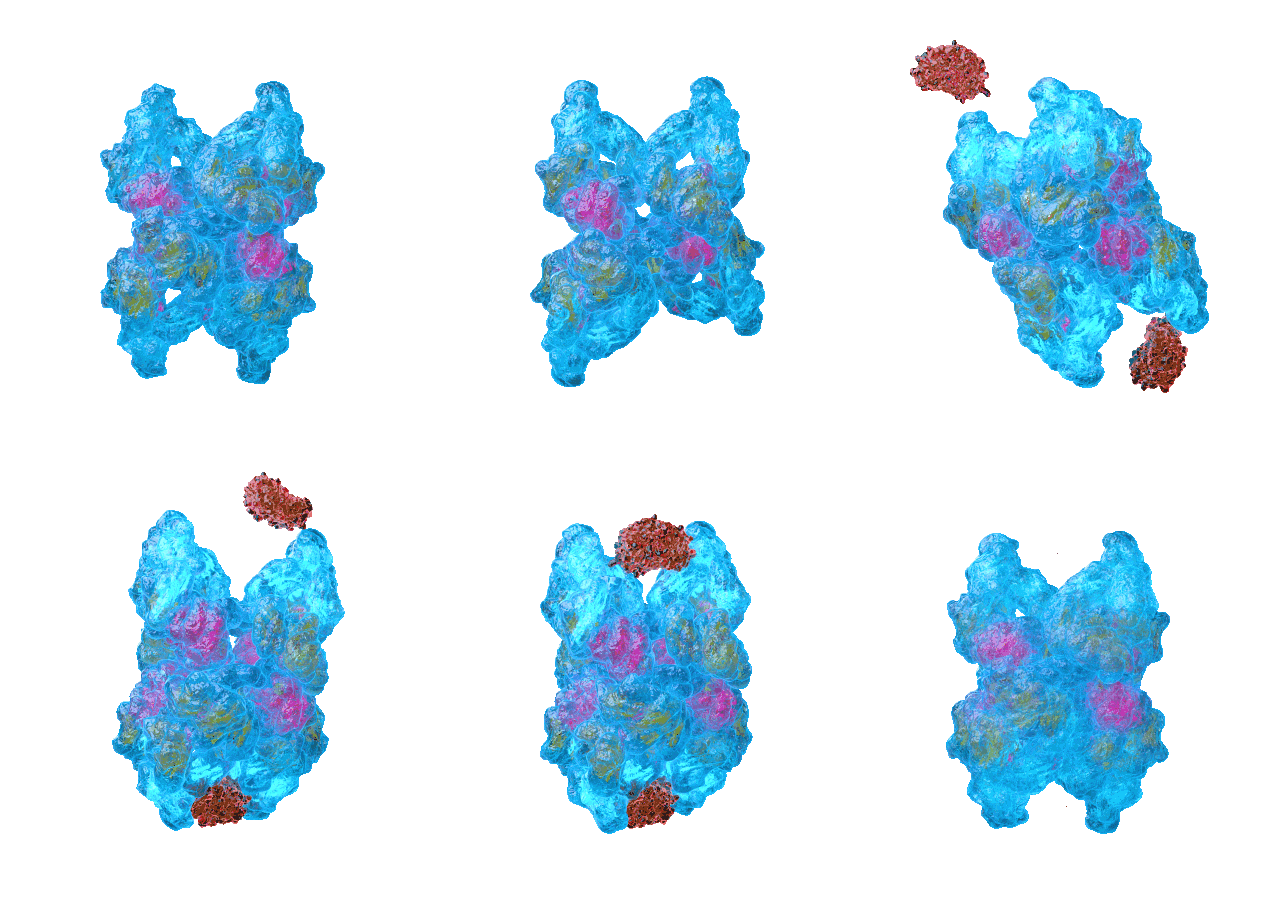
- A2M’s two “bait regions” act as a Venus Flytrap for proteases, encapsulating and rendering them inactive.
- Unfortunately, the naturally occurring levels of A2M are too low to lend any therapeutic benefit to damaged joints.
- We theorized that delivering high concentrations of A2M directly into the joint space could bind to and inhibit the proteases, slowing and eventually halting the progression of OA.
Now, we just had to prove it.
See Appendix for supporting A2M efficacy
data and related scientific publications.
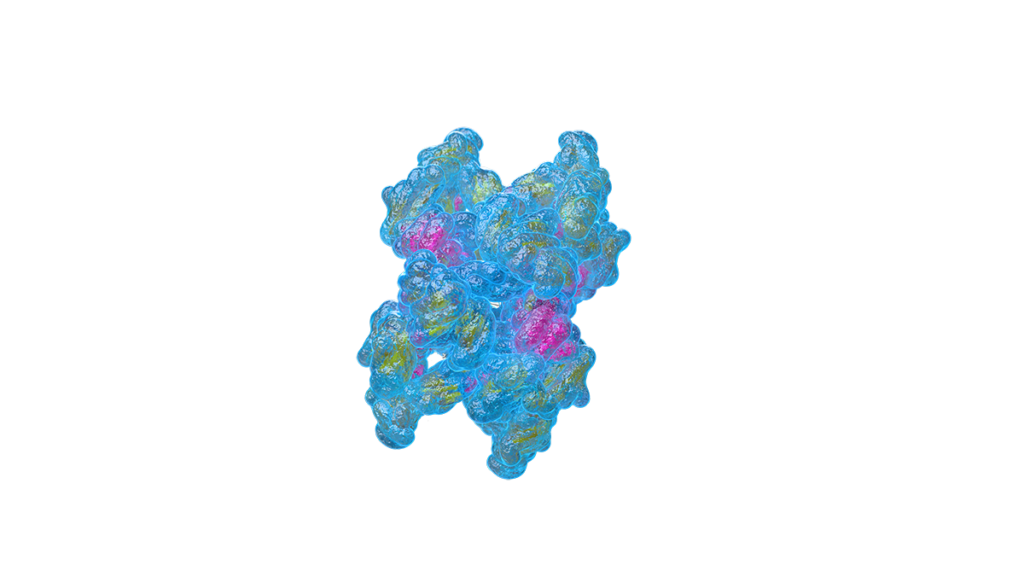
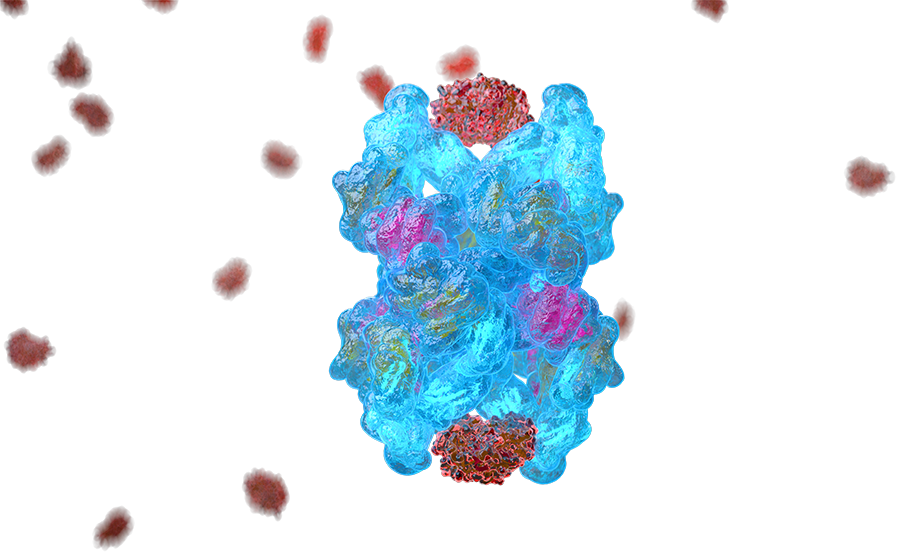
A2M inhibits a class of deleterious enzymes called proteases, which are overabundant in the joints of patients with OA, and degrade the cartilage cushion and cause pain/inflammation. A2M inhibits all the inflammatory mediators of the process, eliminating the burden on the immune system and allowing the body to heal itself efficiently. Unfortunately, the levels of naturally-occurring A2M are insufficient to completely halt the progression of OA, and can only delay the onset of symptoms at best.
Cytonics has demonstrated that concentrating A2M within the joint cavity can halt the progression of OA, allowing the body to heal itself and bring about significant relief to the suffering patient.
Our Breakthrough: CYT-108
CYT-108 is our lead drug candidate under investigation in FDA human clinical trials. A genetically-engineered variant of the natural Alpha-2-Macroglobulin protein, CYT-108 is designed for greater potency and precision, offering superior protective and regenerative effects to osteoarthritis joint tissues. The end result: a powerful dual mechanism of disease-modification that may be able to halt and repair joint damage at the molecular level.
Scientific Publications

Summary: This study investigates the efficacy of engineered A2MJ variants in reducing cartilage degeneration in a rat model of osteoarthritis.
Summary: Explores the potential of the fibronectin–aggrecan complex as a biomarker for early cartilage degradation in non-arthritic hips.
Summary: Examines how inhibiting matrix metalloproteinases influences tendon-to-bone healing in rotator cuff repairs.
Summary: Investigates the impact of platelet-rich plasma on matrix metalloproteinase levels in human synovial fibroblast cultures.
Summary: Reports on the efficacy of intradiscal A2M injections in reducing back pain in FAC-positive patients.
Summary: Assesses the role of A2M in healing ruptured anterior cruciate ligaments in rabbit models.
Summary: Explores how blocking matrix metalloproteinases enhances tendon-bone healing in ACL grafts.
Summary: Identifies proton resonances in the bait region of human A2M and examines the effects of proteases and methylamine.
Summary: Investigates how A2M inhibits ADAMTS-7 and ADAMTS-12 degradation of cartilage oligomeric matrix protein.
Summary: Discusses a genetic polymorphism in the bait region of human pregnancy zone protein.
Summary: Explores how A2M serves as a substrate for ADAMTS-4 and ADAMTS-5 and inhibits these enzymes.